At-home family documentary interviews in Third Lake capture personal memories in the voice of the person who lived them. Your Life, Filmed guides the conversation and combines it with family photographs to create a film for private sharing.
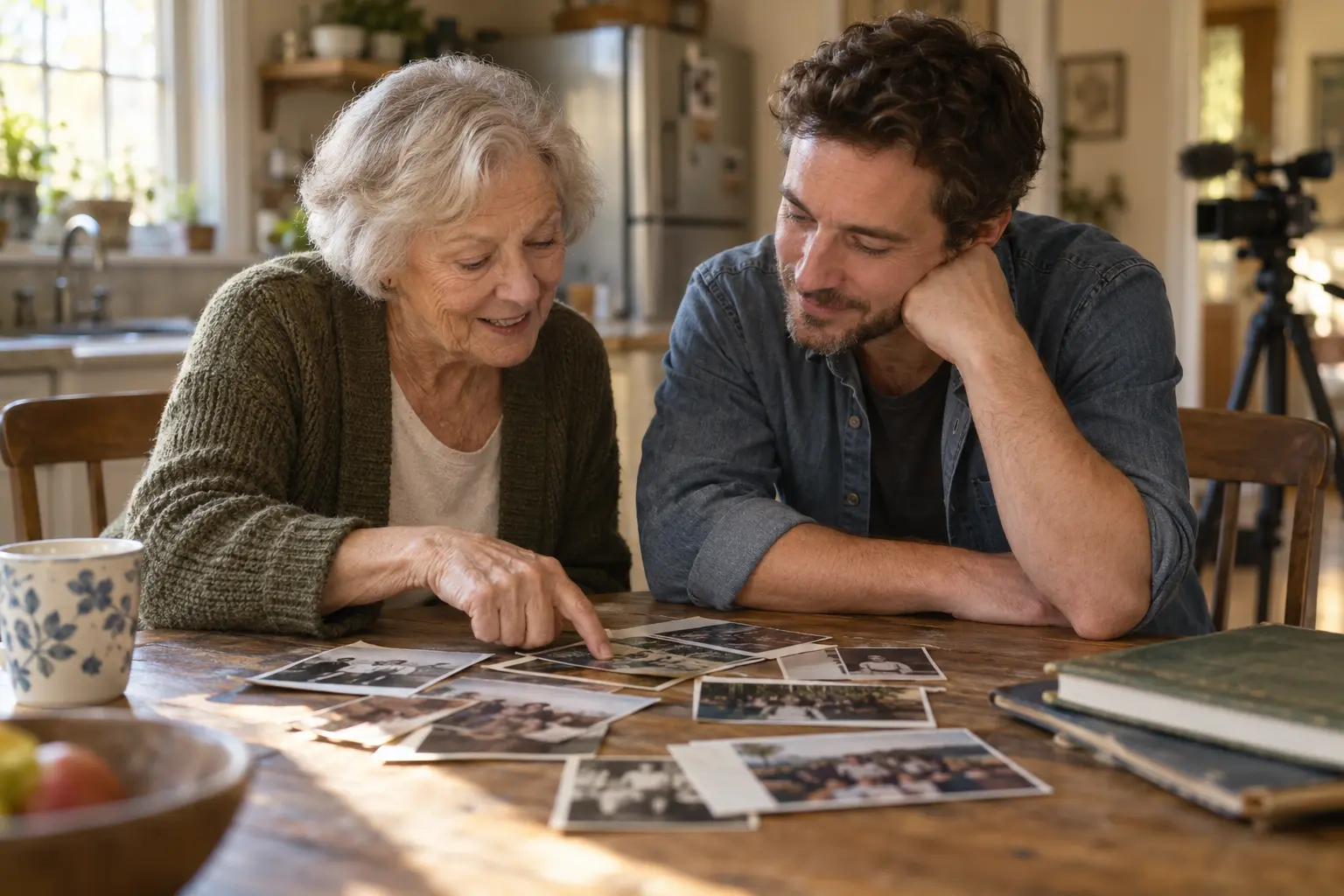
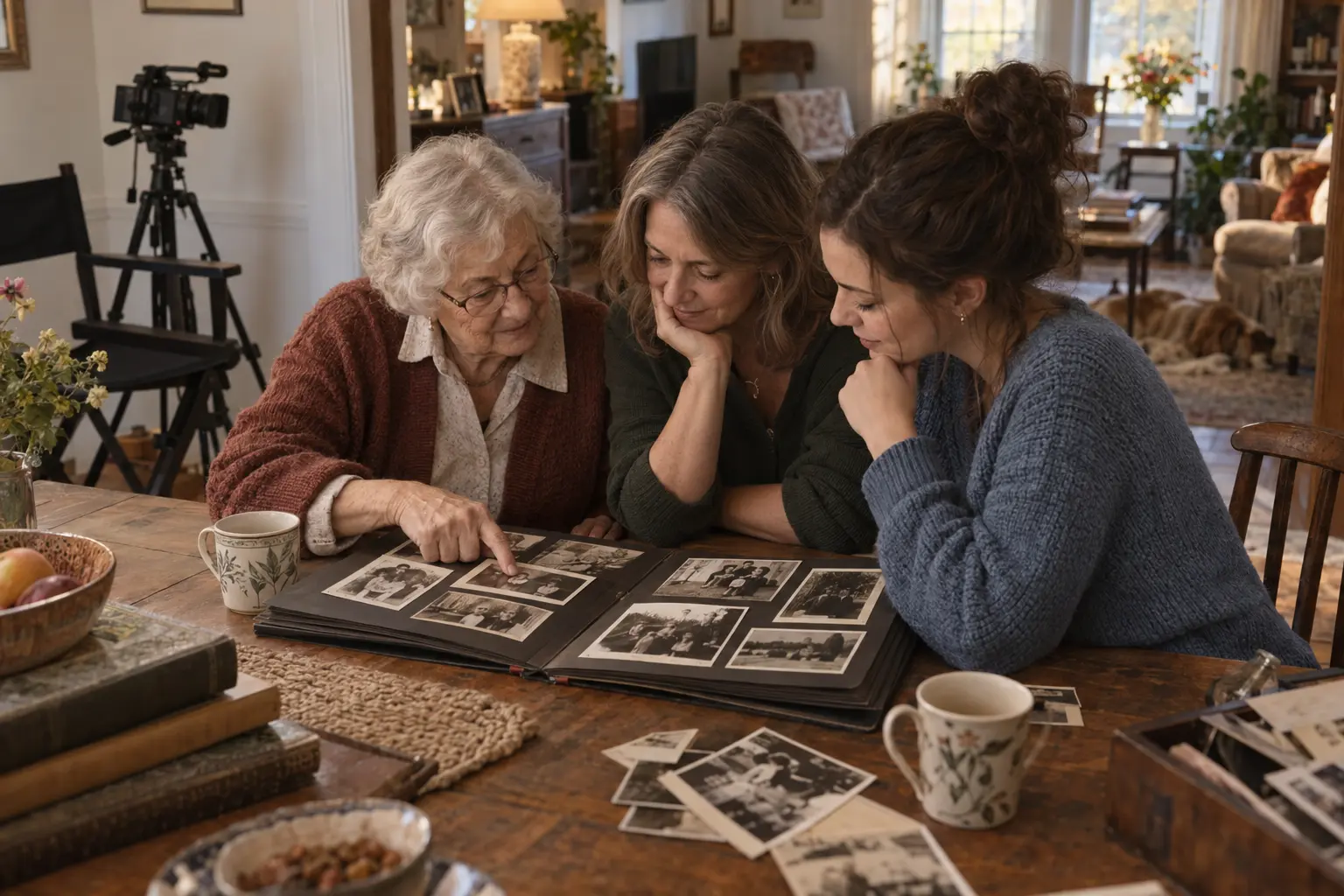
One filmmaker. Two interview cameras. Illustrative setting.
A thoughtful conversation is the center of the film. Illustrative setting.
Plan your family film
Choose an indoor interview before planning lakeside footage.
For a Third Lake home film, begin with a comfortable room where the person can be heard clearly. Lakeside settings can involve wind, weather and access questions. Any additional location should be discussed before booking rather than treated as a necessary part of telling a lake-related story.
Prepare a selection of digital photographs from different stages of life and label the people you can identify. Tell us whether home movie clips are available and how they are stored. The chosen package determines the included materials; older formats or extensive preparation need a separate discussion.
Record your family’s Third Lake stories in conversation.
An album can hold decades of summer photographs without explaining who taught someone to swim, which relatives visited or what a particular season meant. A filmed interview adds those explanations. Begin with a few recognizable images and let the subject describe the people and events around them.
Third Lake includes Druce Lake and Third Lake, along with the Sunshine and Mariner’s Cove neighborhoods. If those places appear in your family history, they offer specific prompts for talking about life here. The interview can also follow childhood, work and relationships from years before the family arrived.
Choose one photograph rather than asking for a summary of every holiday. Who organized the day, who was visiting and what happened after the picture? A particular scene can lead to memories of relatives whose stories younger family members have never heard.
02
Moving into the neighborhood
Ask what brought the family to Sunshine, Mariner’s Cove or another local home, if that is their experience. What did they notice first and who welcomed them? Keep names and dates with the photographs so the finished account has useful context.
03
Traditions that changed with the family
A repeated outing, meal or celebration may have evolved as children grew. Ask what stayed familiar and what each generation added. The story can include quiet routines as well as occasions that produced a full album of pictures.
Life-story film packages
Life-story film packages in Third Lake.
Lake County travel is included in each package. Compare the interview participants, film length and family materials before choosing a scope.
Can we include memories of Druce Lake and Third Lake?
Yes. Personal stories and suitable family photographs can be discussed in the home interview. New footage at a lake is not required to tell those memories. If you want an additional filming location, access and scope must be agreed beforehand.
Do you cover both Sunshine and Mariner’s Cove?
Yes, Third Lake home interviews fall within the Lake County service area. Provide the exact address and practical access details when enquiring. Lake County travel is included, while the number of locations depends on the package.
Can old home movies accompany the interview?
The larger packages allow photographs or short clips within their listed limits. Tell us the format and amount of material you have. Tape conversion, restoration or other preparation should be discussed separately rather than assumed to be included.
Can the film focus on several generations?
Yes, discuss a Family Documentary if you want multiple family perspectives. It costs $12,500 and produces a 45–60 minute film. Identify intended interview subjects early so the project is planned around their participation and the full package inclusions.
Choose a starting point
Family documentary and life-story filming services.